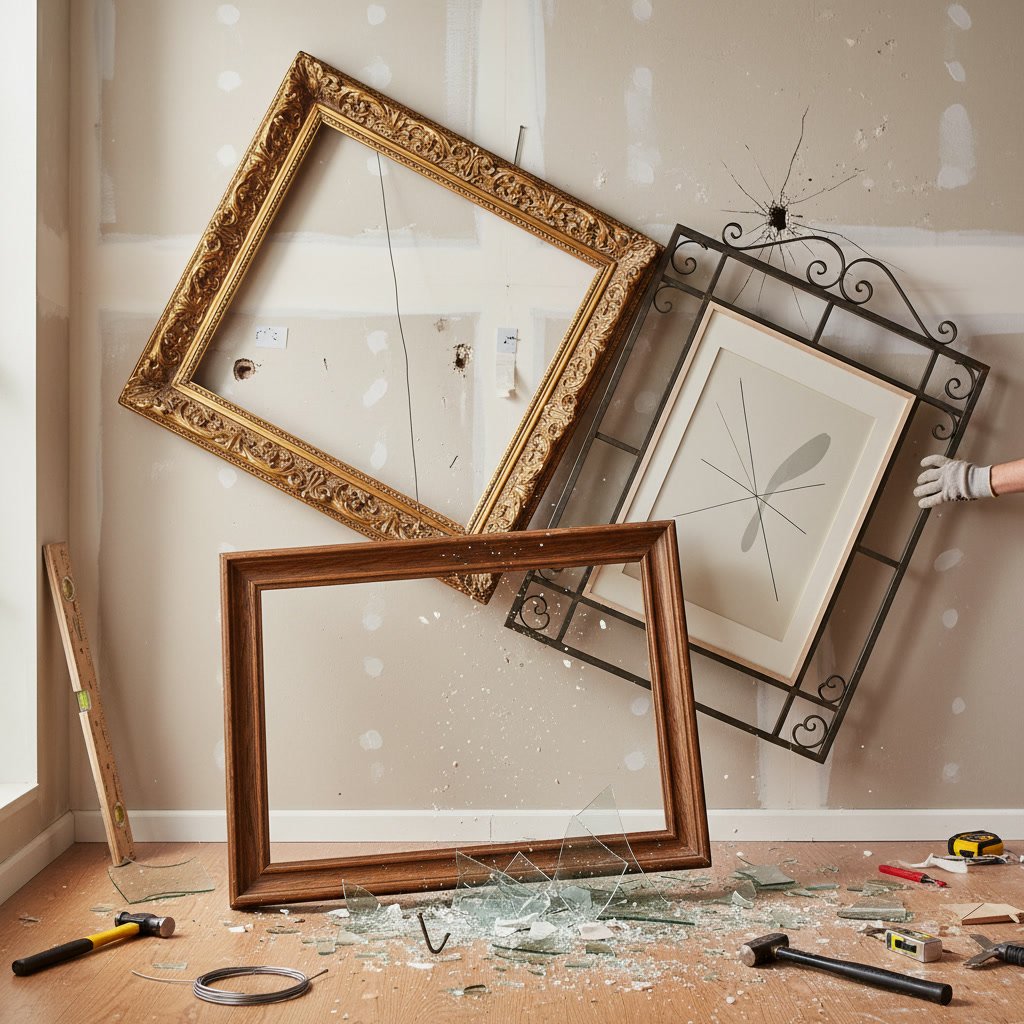
Picture frames too heavy for standard hanging methods can cause serious wall damage, personal injury, and costly repairs if not installed correctly. Frames weighing more than 20 pounds typically require professional-grade anchors, wall stud mounting, or specialized hanging systems that most homeowners don’t have on hand. Attempting to hang oversized artwork or mirrors with basic picture hooks often results in failed installations, damaged drywall, and shattered glass.
Why Frame Weight Matters More Than You Think
The weight of your picture frame determines everything about how it should be mounted. A lightweight 8×10 inch family photo can hang safely on a simple nail, but a large oil painting in an ornate wooden frame demands an entirely different approach. Most hardware stores sell picture hanging kits rated for specific weight ranges, yet many people grab whatever package looks convenient without checking the rating.
Wall composition plays an equally important role. Drywall alone supports very little weight without proper anchoring. A standard picture hook driven into drywall without hitting a stud might hold five to ten pounds safely, but anything heavier risks pulling right through the wall material. The type of anchor, its installation depth, and whether it reaches a wooden stud all determine the actual holding capacity.
The 20-Pound Threshold Most DIYers Ignore
Professional installers recognize 20 pounds as the dividing line between simple and complex hanging jobs. Once a framed piece exceeds this weight, basic hardware becomes unreliable. The frame may stay up for days, weeks, or even months before the anchor slowly works loose and the whole piece crashes down, often in the middle of the night.
Testing your frame’s weight takes just a moment with a bathroom scale. Remove any hanging wire or brackets, place the frame face-down on the scale, and check the reading. Add two or three pounds to account for hanging hardware and wire tension. If the total approaches or exceeds 20 pounds, standard picture hooks won’t provide adequate support.
When the Frame Tilts Forward After Hanging
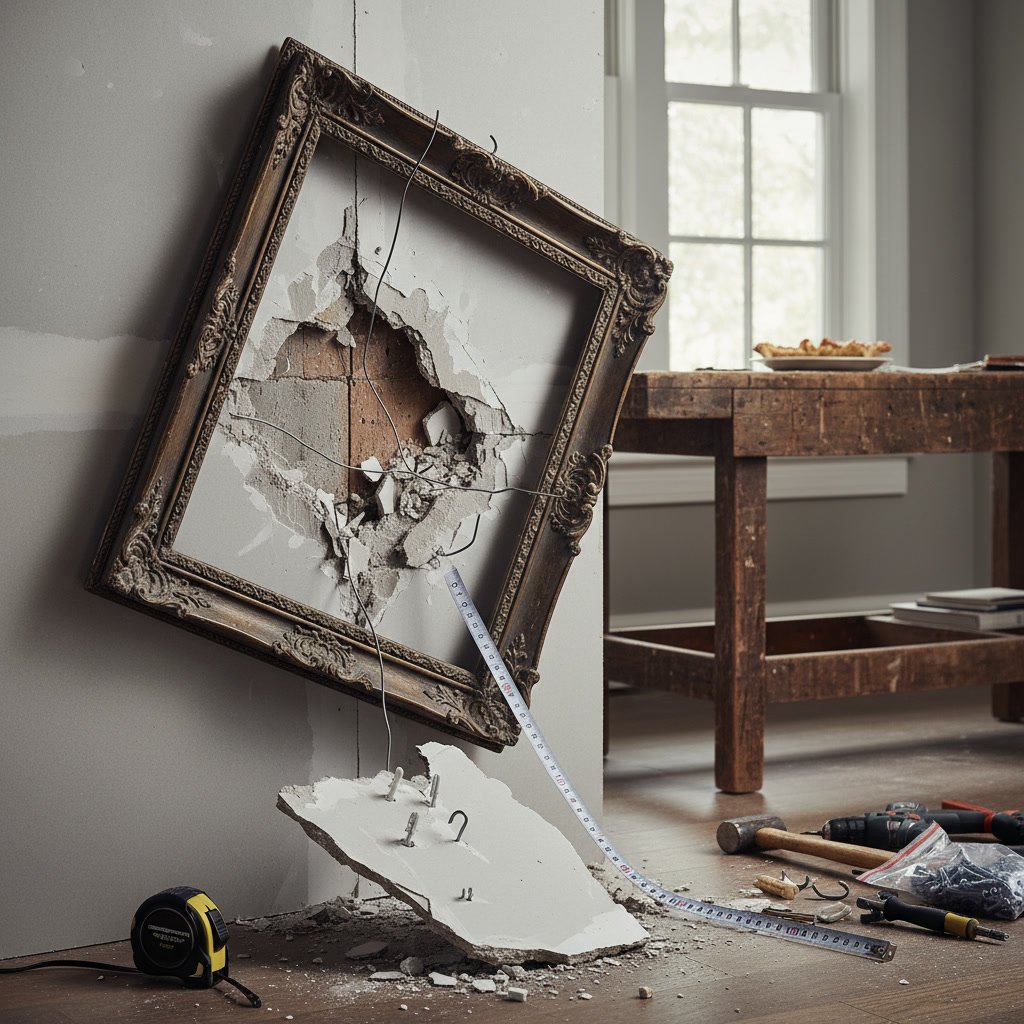
A frame that refuses to sit flush against the wall signals a weight distribution problem. Heavy frames create significant leverage against their mounting points. If the top of the frame tilts away from the wall by more than half an inch, the hanging wire and hooks are struggling to support the load properly.
This forward tilt also indicates that the center of gravity sits too far from the wall. Ornate frames with thick molding, deep shadowboxes, and frames containing multiple mats all shift the weight balance forward. These pieces need specialized hanging systems that account for the offset center of gravity, not just the total weight.
Visible Drywall Damage Around the Mounting Point
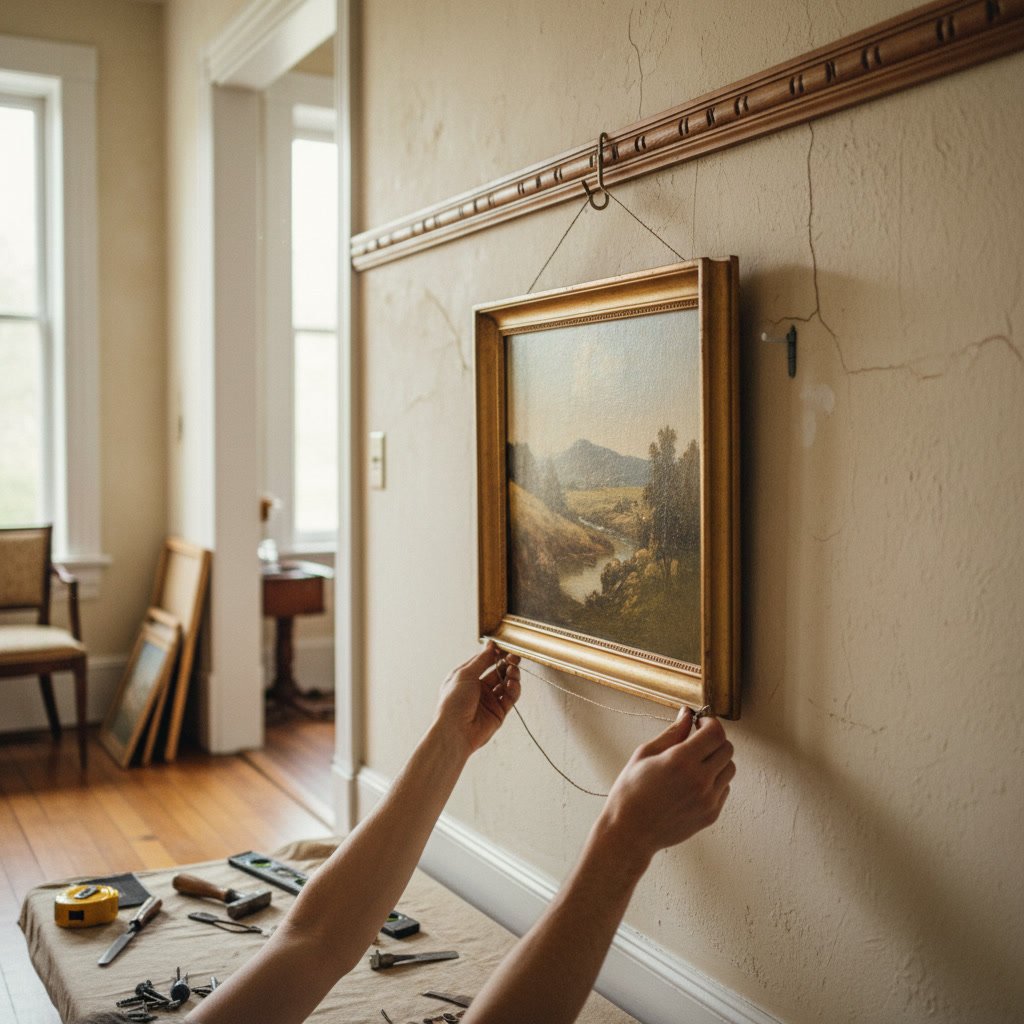
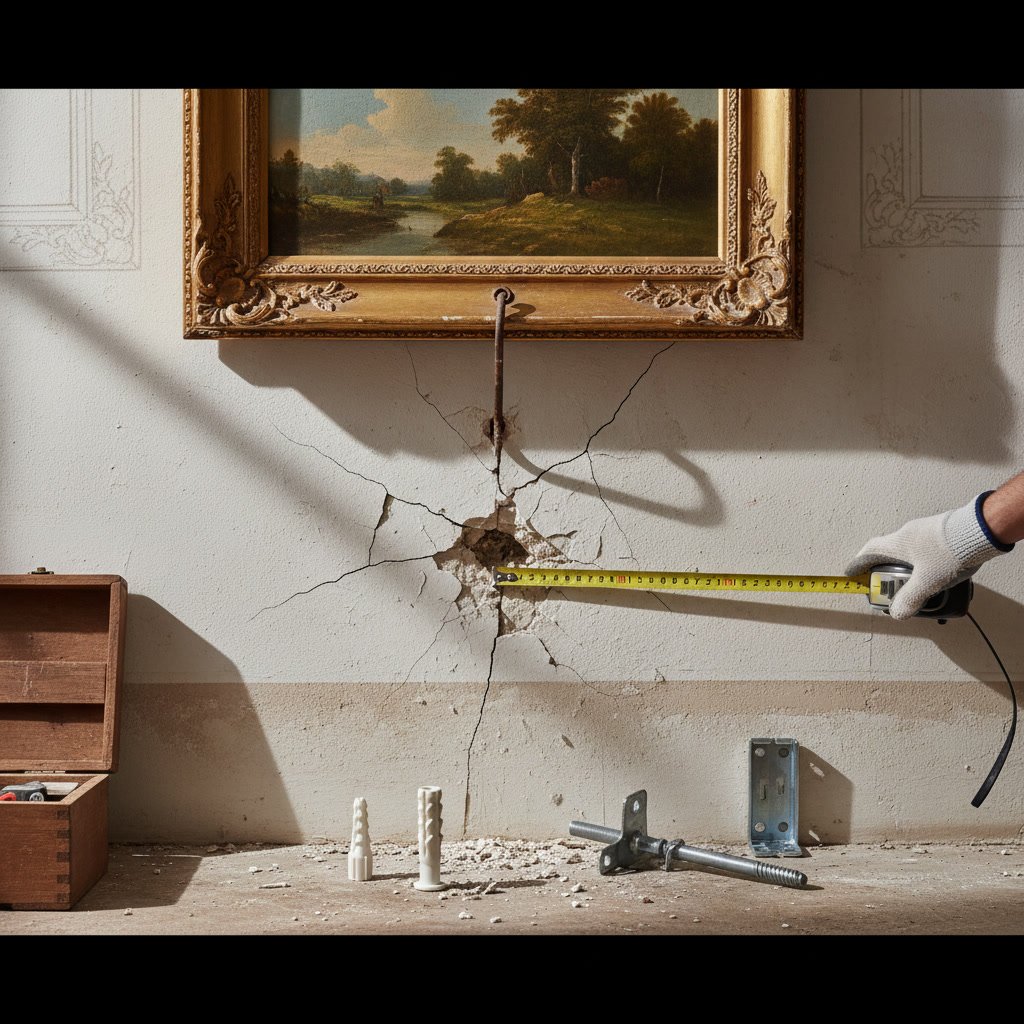
Small cracks radiating from your picture hook tell you the wall material is failing. Drywall begins to crumble when subjected to excessive pulling force. You might notice white dust on the floor beneath the frame, slight bulging around the hook, or hairline cracks extending an inch or more from the mounting point.
Once drywall damage starts, it progresses quickly under constant load. The frame might appear secure today, but the compromised wall material continues to deteriorate. Eventually, the hook pulls free, and the frame falls. Different wall types require specific hanging approaches to prevent this kind of structural damage.
Multiple Failed Attempts with Store-Bought Hooks in Long Grove Homes
If you’ve already tried hanging the same frame twice and had it fall both times, the problem isn’t bad luck. The hardware you’re using simply cannot handle the load. Many homeowners cycle through increasingly large picture hooks, hoping the next size up will work, but this approach ignores the fundamental issue of weight distribution and wall composition.
Older homes throughout the area often have plaster walls rather than modern drywall. Plaster requires completely different mounting techniques and specialized anchors. Using drywall anchors in plaster walls guarantees failure because the materials have different density and structural properties.
Signs Your Wall Type Requires Specialized Equipment
Brick, concrete, tile, and plaster walls all demand tools and fasteners that most homeowners don’t own. Mounting heavy frames on these surfaces requires masonry bits, concrete anchors, and sometimes specialized adhesive systems. A standard drill and basic picture hooks won’t penetrate these harder materials safely.
Testing your wall type takes just seconds. Push a thumbtack into an inconspicuous spot. If it slides in easily, you have drywall. If it won’t penetrate at all, you’re dealing with plaster, concrete, or masonry. Each material has specific weight-bearing characteristics and requires matching hardware for safe installation.
The Frame Sways When Doors Close or People Walk Past
Movement indicates insufficient mounting stability. Heavy frames need solid, multi-point attachment to prevent swaying. A frame that shifts noticeably when someone walks across the room or closes a nearby door isn’t secured properly to the wall structure.
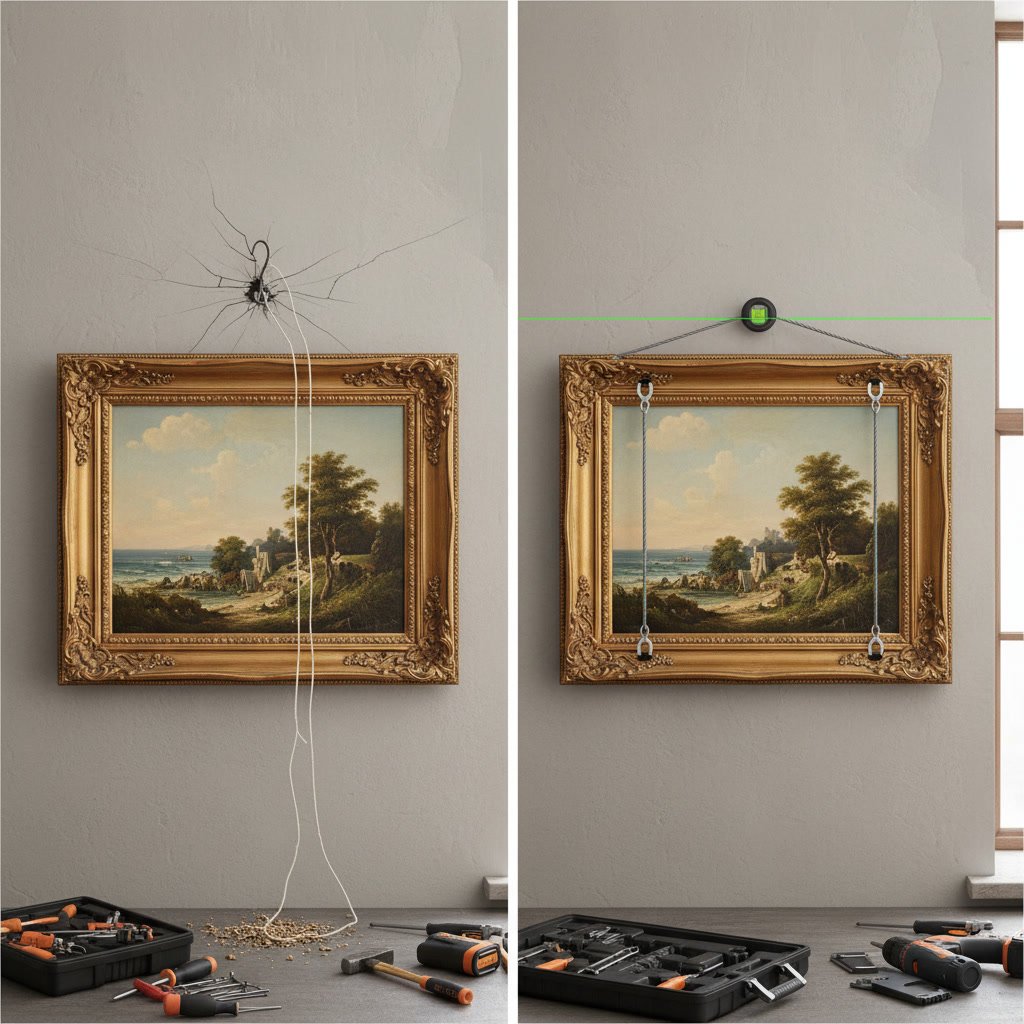
Professional installers use techniques like dual-hook mounting, French cleats, or direct stud attachment to eliminate movement. These methods distribute weight across multiple attachment points and anchor the frame rigidly to the wall. Expert art and mirror hanging services include assessment of the proper mounting system for each piece’s specific weight and dimensions.
Glass, Mirror, or Metal Components Add Hidden Weight
The visible frame tells only part of the weight story. Glass alone adds significant pounds, especially in larger pieces. A 24×36 inch frame with standard glass weighs about eight additional pounds just from the glazing. Museum glass or acrylic adds even more weight.
Mirrors present the same challenge multiplied. A decorative mirror measuring 30×40 inches can easily weigh 30 to 40 pounds when you factor in the glass, backing, and frame material. Metal frames, though often thinner than wood, add considerable weight due to material density. Always calculate total weight including all components, not just the visible frame.
Comparing DIY Methods to Professional Installation Techniques
Standard DIY approaches use picture wire, D-rings, and wall hooks rated for general weight ranges. These systems work perfectly for lightweight frames but become unreliable as weight increases. Professional installers evaluate each piece individually and select from a wider range of specialized hardware.
Professional techniques include French cleat systems that distribute weight across the entire frame width, wall-mounted Z-bars for heavy mirrors, direct stud mounting with lag bolts for maximum security, and adhesive mounting systems for delicate wall surfaces. Each method addresses specific challenges that simple hooks cannot solve.
The installation process itself differs significantly. Professional picture hanging appointments include precise measurements, electronic stud finding, level verification at multiple points, and final stability testing. These steps prevent the common DIY mistakes that lead to failed installations.
When Insurance and Property Value Are at Stake
Valuable artwork deserves installation methods that protect your investment. A falling frame can shatter glass, tear canvas, damage the frame itself, and destroy whatever sits below it. Homeowner’s insurance may not cover damage caused by improper DIY installation, leaving you responsible for replacement costs.
Wall damage from failed hanging attempts affects property value and creates visible blemishes that require professional drywall repair. Large holes, cracked plaster, or damaged brick all reduce your home’s appeal and may need correction before selling. Investing in proper installation from the start prevents these costly secondary problems.
Protecting Your Investment with the Right Installation Approach
Heavy frames demand respect for physics and building materials. Recognizing when a piece exceeds safe DIY limits protects both your artwork and your walls. The warning signs are clear: excessive weight, previous failures, wall damage, persistent movement, or specialized wall materials all indicate the need for professional assistance.
Proper installation ensures your valuable pieces stay exactly where you want them for years to come. The cost of professional hanging services is minimal compared to replacing damaged artwork, repairing walls, or dealing with injuries from falling frames. When you notice any of the signs discussed above, the smart choice becomes obvious.
At Your Service Pros has helped homeowners throughout the Chicagoland area safely install heavy artwork, mirrors, and decorative pieces for over 15 years. Our team brings the specialized tools, hardware, and expertise needed to handle frames of any size or weight on any wall type. If your picture frames are testing the limits of DIY methods, we’re ready to help. Call +16309017707 to schedule your professional installation and ensure your valuable pieces are mounted securely and beautifully.